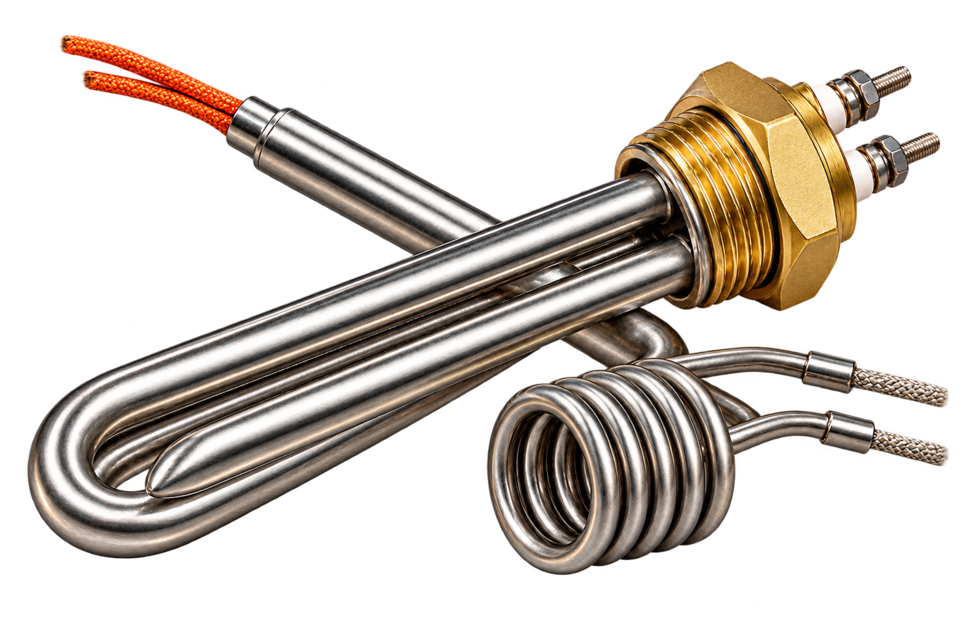
304 stainless steel cartridge heater with a built-in Type K thermocouple, featuring multiple power and length options. Supplied as a 2-piece set.
Cartridge Heaters with Thermocouple
Cartridge heaters with an integrated thermocouple combine heating and temperature sensing in one compact assembly. They are useful in moulds, dies and machinery where the temperature must be monitored close to the heat source.
Choose the heater dimensions, voltage and power together with the required thermocouple type and lead arrangement. The sensor must be connected to a compatible controller or measuring instrument.
Recommended
Electric cartridge heater made of 304 stainless steel, featuring a built-in K-type thermocouple and configurable power and voltage.
Need an exact replacement?
Send dimensions, voltage, power, material, and photos. We’ll manufacture a heating element for your application.
Fill out the formElectric cartridge heater with a built-in Type K thermocouple and 304 stainless steel tube.
304 stainless steel cartridge heater featuring an integrated Type K thermocouple for precise temperature control in industrial equipment.
Industrial 304 stainless steel cartridge heaters with built-in K-type thermocouple wires, designed for high-temperature tooling and machinery.
Frequently asked questions
Practical guidance for choosing and using products in this category.
How do I select the correct cartridge heater size?
Check the sheath diameter and tolerance, insertion length, available mounting depth and lead-exit arrangement against the equipment drawing. Also match voltage, wattage and the required temperature-sensor type if one is built in.
The fit between the cartridge and its bore affects heat transfer. Use the heater manufacturer's specified bore tolerance for the application rather than choosing a part solely because it can be pushed into the hole.
Does a cartridge heater with a thermocouple control its own temperature?
An integrated thermocouple provides a temperature signal; it does not by itself switch the heater or regulate its temperature. The heater needs a compatible controller and an appropriately rated switching arrangement.
Confirm the thermocouple type, polarity and wiring diagram, and identify the sensor leads separately from the heater power leads. Do not connect sensor leads to the heater supply.